I think something's wrong with me. Two years post college, and I'm still scared to death for my parents health, still feeling paralyzed and slow in making friends and getting to know people, still obsessive-compulsively going online and wasting the hours away. Still not responsible, still procrastinating, still feeling like I'm getting away with it all by just putting off the consequences of anything I do.
Quarter life crisis, maybe?
Showing posts with label reflection. Show all posts
Showing posts with label reflection. Show all posts
Tuesday, August 3, 2010

Wednesday, July 14, 2010
variational forms (for the non-mathematical)
In the last post, I mentioned that certain theologies of creation reminded me of variational forms, a mathematical idea in the realm of differential equations. Allow me to present a brief crash course on the math behind the ideas.
Scientists and engineers are interested in partial differential equations (PDEs). They model basically all physical phenomena, from biology to physics to everything in between - most computer simulations involve solving PDEs (like car crash testing, or airplane modeling). They might look like

So the double derivative of u w.r.t. x is equal to some function "f(x,y)". There are many examples, all on Wikipedia (heat equation, wave equation, Navier Stokes equations, etc etc) and all with physical meaning, but for now, we'll focus on the math.
In formal mathematics, before ever solving this, it's necessary to prove a solution even exists. Additionally, most of the time we solve these problems on computers using approximations...and the reason that existence of solutions is important is precisely because of these approximation methods. Approximation methods, on an abstract level, search a "space" of functions for a function that is close to the solution of the PDE. However, unless a solution exists, it's pointless to try to approximate it. Let me illustrate.
I'm sure most of you have played the game where you have 3 or 4 hole shapes, and a set of blocks. The goal is to put all the blocks through the correct hole (triangle goes in triangle hole, circle goes in circle hole, etc etc).

I'm going to use the following analogy for the rest of the post. Imagine a game where you have such a set of blocks, and just one hole. That set of blocks is like the "space" of functions that we search for a solution, and the hole is like the PDE - it tells us what the solution should do (i.e. fit in the hole, or in the PDE sense, satisfy the equation).

Now, imagine that instead of our set of blocks, we get something akin to Legos - we may not have the block that fits in the hole, but if we get make our collection of Legos more and more diverse, we may be able to build something that fits in the hole. This is basically what PDE solvers are doing - they try to build a solution/block that fits in the hole/PDE. However, pretend the hole is fake or doesn't go through all the way. This is akin to the problem not having a solution - you can search all you want in the Legos, but you will never be able to force anything through that hole.
So far, it's been pretty straightforward, right? Build a block that fits into the hole. Get more pieces if it doesn't and keep trying. However, if you think about it, we may not actually want the "solution" block that we build to fit through the hole itself. Imagine, for example, the edged corners of legos. Pretend our hole is a circle.

You could get a good approximation to a circle from squares, but the edges of the squares would prevent the approximation from fitting in the hole (unless you cut them off, like in the above pic). If you did actually get the approximation to fit, it would probably look smaller than the circle that would actually fit in the hole.
Hence, we get to the idea of "relaxing constraints", which is a large part of what variational forms do. Basically, we change the rules of our game - we're no longer looking to build something that fits in the hole, we're now trying to build something that looks like something that would fit in the hole. In other words, we're relaxing the constraints on our solution, changing it from "needs to fit into hole" to "needs to look like something that fits into the hole".
How does this look mathematically? Take our old equation
and pretend we multiply it by some random differentiable function "v(x)" for no reason, and then integrate it from 0 to 1. If v = 0 when evaluated at both x = 1 and x = 0, then we can integrate it by parts. What this reduces to is a so-called "variational form" of the equation.

The subtle difference is in the derivatives - notice that in the old equation, we took the derivative of our solution "u" twice, which meant it had to be differentiable twice. However, in the new case, we only have to take the derivative of "u" once. Mathematically, we took constraints off of the equation, and believe it or not, this makes a huge difference in solving for solutions, especially for more complex equations. There is additional advantage in using variational forms (powerful theorems concerning solutions and accuracy) but that's much more mathematically complex.
The other key part to notice concerning variational forms is the function "v" we multiplied by, which is formally called a "test function". Notice we move a derivative from "u" over to "v". In some sense, we're splitting the differential equation between functions "u" and "v". This is the reason some say that variational forms capture the "action" of a differential equation on test functions, and this, in my opinion, is the more interesting way to look at variational forms. You don't look at just the differential equation and its solution anymore; you look at what the differential equation looks like to the test functions that "see" the equation, and you look at the way the solution is "seen" by the test functions as well.
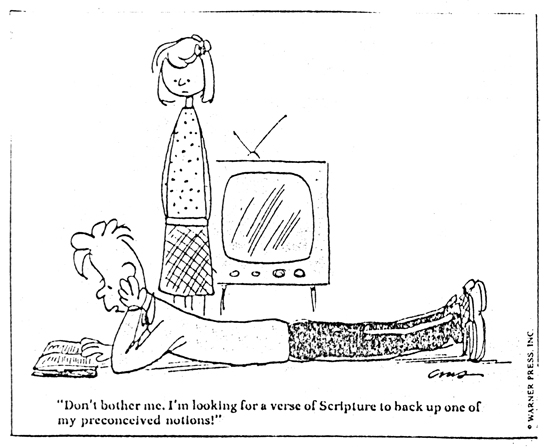
The reason I find this so interesting (besides the fact that I'm a huge nerd) is because of the analogy I tend to see between this and faith. Take, for example, debates on Scriptural interpretation. I've always grown up with the sense that I had to take things literally and in the most conservative fashion because it was the safest way to go. I would worry that more liberal interpretations were 1) not grounded in anything, and 2) were slippery slopes to more and more liberal interpretations until we were basically just making stuff up.
 What I find so fascinating about N.T. Wright's view is that he seems to do for theology just what relaxed variational forms do for PDEs. More on this in the next post :P this one's long and mathematical enough already.
Scientists and engineers are interested in partial differential equations (PDEs). They model basically all physical phenomena, from biology to physics to everything in between - most computer simulations involve solving PDEs (like car crash testing, or airplane modeling). They might look like

So the double derivative of u w.r.t. x is equal to some function "f(x,y)". There are many examples, all on Wikipedia (heat equation, wave equation, Navier Stokes equations, etc etc) and all with physical meaning, but for now, we'll focus on the math.
In formal mathematics, before ever solving this, it's necessary to prove a solution even exists. Additionally, most of the time we solve these problems on computers using approximations...and the reason that existence of solutions is important is precisely because of these approximation methods. Approximation methods, on an abstract level, search a "space" of functions for a function that is close to the solution of the PDE. However, unless a solution exists, it's pointless to try to approximate it. Let me illustrate.
I'm sure most of you have played the game where you have 3 or 4 hole shapes, and a set of blocks. The goal is to put all the blocks through the correct hole (triangle goes in triangle hole, circle goes in circle hole, etc etc).
I'm going to use the following analogy for the rest of the post. Imagine a game where you have such a set of blocks, and just one hole. That set of blocks is like the "space" of functions that we search for a solution, and the hole is like the PDE - it tells us what the solution should do (i.e. fit in the hole, or in the PDE sense, satisfy the equation).
Now, imagine that instead of our set of blocks, we get something akin to Legos - we may not have the block that fits in the hole, but if we get make our collection of Legos more and more diverse, we may be able to build something that fits in the hole. This is basically what PDE solvers are doing - they try to build a solution/block that fits in the hole/PDE. However, pretend the hole is fake or doesn't go through all the way. This is akin to the problem not having a solution - you can search all you want in the Legos, but you will never be able to force anything through that hole.
So far, it's been pretty straightforward, right? Build a block that fits into the hole. Get more pieces if it doesn't and keep trying. However, if you think about it, we may not actually want the "solution" block that we build to fit through the hole itself. Imagine, for example, the edged corners of legos. Pretend our hole is a circle.
You could get a good approximation to a circle from squares, but the edges of the squares would prevent the approximation from fitting in the hole (unless you cut them off, like in the above pic). If you did actually get the approximation to fit, it would probably look smaller than the circle that would actually fit in the hole.
Hence, we get to the idea of "relaxing constraints", which is a large part of what variational forms do. Basically, we change the rules of our game - we're no longer looking to build something that fits in the hole, we're now trying to build something that looks like something that would fit in the hole. In other words, we're relaxing the constraints on our solution, changing it from "needs to fit into hole" to "needs to look like something that fits into the hole".
How does this look mathematically? Take our old equation
and pretend we multiply it by some random differentiable function "v(x)" for no reason, and then integrate it from 0 to 1. If v = 0 when evaluated at both x = 1 and x = 0, then we can integrate it by parts. What this reduces to is a so-called "variational form" of the equation.

The subtle difference is in the derivatives - notice that in the old equation, we took the derivative of our solution "u" twice, which meant it had to be differentiable twice. However, in the new case, we only have to take the derivative of "u" once. Mathematically, we took constraints off of the equation, and believe it or not, this makes a huge difference in solving for solutions, especially for more complex equations. There is additional advantage in using variational forms (powerful theorems concerning solutions and accuracy) but that's much more mathematically complex.
The other key part to notice concerning variational forms is the function "v" we multiplied by, which is formally called a "test function". Notice we move a derivative from "u" over to "v". In some sense, we're splitting the differential equation between functions "u" and "v". This is the reason some say that variational forms capture the "action" of a differential equation on test functions, and this, in my opinion, is the more interesting way to look at variational forms. You don't look at just the differential equation and its solution anymore; you look at what the differential equation looks like to the test functions that "see" the equation, and you look at the way the solution is "seen" by the test functions as well.
The reason I find this so interesting (besides the fact that I'm a huge nerd) is because of the analogy I tend to see between this and faith. Take, for example, debates on Scriptural interpretation. I've always grown up with the sense that I had to take things literally and in the most conservative fashion because it was the safest way to go. I would worry that more liberal interpretations were 1) not grounded in anything, and 2) were slippery slopes to more and more liberal interpretations until we were basically just making stuff up.
What I find so fascinating about N.T. Wright's view is that he seems to do for theology just what relaxed variational forms do for PDEs. More on this in the next post :P this one's long and mathematical enough already.Tuesday, July 13, 2010
standards of interpretation? and more math
Good news, everybody (who hasn't seen an update on facebook for this). I got surgery! And hopefully it'll fix the holes that have been developing in my ankle for a while now. Unfortunately, it means I'm out of commission for a good 2 months before I walk again, so I'm trying right now to keep myself more busy than I've been in the past few days (most of which were spent on facebook, craigslist, and onemanga.com).
For the past couple of days I've been reading the Biologos blog for a few days now. They had a recent post in which they discussed Albert Mohler's (prez of the Southern Baptist Theological Seminary) speech in which he defended a young-earth interpretation of Genesis and criticized Biologos for trying to cater to both science and faith. A transcript of Mohler's talk can be found here.
While I'm not sold on theistic evolution either, I do think Mohler is a bit off. Let me explain and compare N.T. Wright's way of thinking to his.
From what I can see, Mohler believes in 7 day young earth creationism, based on the common-sense/straightforward reading of Genesis. I think his interpretation and arguments are flawed, not just because of scientific evidence, but also because his exegetical and theological reasons for requiring a young earth interpretation are lacking (Biologos has more on those reasons here and here).
However, arguing further over this only makes a mountain out of a molehill - it eats up time researching and arguing, and at the same time only makes the rift b/w young earth and old earth and whatever else is out there bigger (and didn't Jesus tell us all to be as one?).
And this is why I like Wright. N.T. Wright doesn't directly subscribe to either old/young earth - he sort of sidesteps the question and asks a different one.
The video opens with him discussing different datings of Genesis; almost immediately after, he basically sidesteps the question and asks instead how Genesis was read by the Jewish people right before New Testament times. What was the action or impact of Genesis on the people Jesus came to reach?
In asking this question, Wright takes two steps:
A recent comment to a previous post on the subject - "do subsequent authors of the Bible take that view of Genesis, or do they have a more literal interpretation?" That's up to debate; I've heard both views taken. However, I do think that asking whether or not the authors believed one thing or not is kind of missing the point - Israelites may have believed lots of things which were factually wrong.
As an analogy, imagine trying to read "The Tortoise and the Hare" to a child. The kid might exclaim halfway through the story that hares and tortoises aren't intelligent enough to want to race each other in the first place. Yes, the kid is technically right in his statement, but that's not the point. A better analogy might be of cultural stories - most historians and anthropologists look beyond the question of whether they're true or false in order to ask the question, "what can this story tell me about the people that told it?".
Wright says it best at the end of the video - the whole debate on evolution/creation/etc in Genesis 1 has taken our attention from the larger picture and focused it on (possibly meaningless) details, so that the end message conveyed through our interpretation is something completely different than what anyone before the 19th century would have read. If Paul is right, and Jesus' death and resurrection are the grounds on which faith stands, then faith is grounded in a specific historical event and a specific person who lived his life as a message to a specific people. In order to understand more deeply what Jesus was preaching, I'd want to be as close as I could to his messages, and to do that, I'd need to walk there in Jewish shoes.
As a funny aside, I immediately thought of the mathematical concept of "weak formulations" after writing this post. If you're at all interested (please be interested) tell me and I'd love to explain it and how it relates in my mind to these arguments :D.
For the past couple of days I've been reading the Biologos blog for a few days now. They had a recent post in which they discussed Albert Mohler's (prez of the Southern Baptist Theological Seminary) speech in which he defended a young-earth interpretation of Genesis and criticized Biologos for trying to cater to both science and faith. A transcript of Mohler's talk can be found here.
While I'm not sold on theistic evolution either, I do think Mohler is a bit off. Let me explain and compare N.T. Wright's way of thinking to his.
From what I can see, Mohler believes in 7 day young earth creationism, based on the common-sense/straightforward reading of Genesis. I think his interpretation and arguments are flawed, not just because of scientific evidence, but also because his exegetical and theological reasons for requiring a young earth interpretation are lacking (Biologos has more on those reasons here and here).
However, arguing further over this only makes a mountain out of a molehill - it eats up time researching and arguing, and at the same time only makes the rift b/w young earth and old earth and whatever else is out there bigger (and didn't Jesus tell us all to be as one?).
And this is why I like Wright. N.T. Wright doesn't directly subscribe to either old/young earth - he sort of sidesteps the question and asks a different one.
The video opens with him discussing different datings of Genesis; almost immediately after, he basically sidesteps the question and asks instead how Genesis was read by the Jewish people right before New Testament times. What was the action or impact of Genesis on the people Jesus came to reach?
In asking this question, Wright takes two steps:
- He takes interpretation of Genesis away from facts (which may or may not change lives) and back into the theological realm - how it was read by the Jewish people impacts how Jesus' message should affect us.
- Wherease Mohler's interpretation of texts was based on "common sense" readings, Wright gives a clear standard of interpretation for Biblical texts - Jesus and the nation of Israel that he came for.
A recent comment to a previous post on the subject - "do subsequent authors of the Bible take that view of Genesis, or do they have a more literal interpretation?" That's up to debate; I've heard both views taken. However, I do think that asking whether or not the authors believed one thing or not is kind of missing the point - Israelites may have believed lots of things which were factually wrong.
As an analogy, imagine trying to read "The Tortoise and the Hare" to a child. The kid might exclaim halfway through the story that hares and tortoises aren't intelligent enough to want to race each other in the first place. Yes, the kid is technically right in his statement, but that's not the point. A better analogy might be of cultural stories - most historians and anthropologists look beyond the question of whether they're true or false in order to ask the question, "what can this story tell me about the people that told it?".
Wright says it best at the end of the video - the whole debate on evolution/creation/etc in Genesis 1 has taken our attention from the larger picture and focused it on (possibly meaningless) details, so that the end message conveyed through our interpretation is something completely different than what anyone before the 19th century would have read. If Paul is right, and Jesus' death and resurrection are the grounds on which faith stands, then faith is grounded in a specific historical event and a specific person who lived his life as a message to a specific people. In order to understand more deeply what Jesus was preaching, I'd want to be as close as I could to his messages, and to do that, I'd need to walk there in Jewish shoes.
As a funny aside, I immediately thought of the mathematical concept of "weak formulations" after writing this post. If you're at all interested (please be interested) tell me and I'd love to explain it and how it relates in my mind to these arguments :D.
Saturday, June 19, 2010
crappy coding practices
I've been working with my professor's code for the past 2 years, and it's got a reputation for being hard to work with. At the same time, my prof is so incredibly proud of it, and claims (correctly) that it can do things no other code can do for problems. The hard part is getting it to do what you want correctly.
A quick coding philosophy lesson - like Shrek and onions, good code should have layers, each with a different level of immutability. This tends to hold in general for any algorithm, program, set of instructions for a problem - make it so that small changes to the problem require only small changes to the program in order to adapt to the new problem.
An example of what not to do - say a program uses some general algorithm to solve a mathematical problem. Hard-code information about a particular problem into the algorithm code, however, and you have a code that's intertwined too much, so that things are connected where they shouldn't be. When you change the problem you're solving, you end up needing to change what should be a general algorithm as well.
Of course, this means that if your code is layered, your inner most code will be used by almost everything else, so to change something there may mean recoding most of the code base. My prof's code is a great example; he built things based around coding protocols and methods of the 70's and 80's, so the heart of the code boasts some pretty annoying outdated practices (for those that are interested, two phrases - implicit declarations and global variables). To further complicate matters, since he needs to maintain some form of control over the code, he refuses to let anyone but himself change these data structures.
So you have a code that has worked for my professor, but has been packaged in a way that nobody can fix it, and few people want to use it because it's so user unfriendly.
N.T. Wright's remark about the rigid intertwining of religious belief with political agendas (abortion, evolution) and specific doctrines (specific inerrancy, literal interpretation) reminds me of my experiences with coding. When coding with my professor's code, I have to write the code in a certain way in order for it to fit the logic of the overall codebase.
Similarly, I feel like theological thought needs then to be executed a certain way in order to fit into the framework of such religious thought. Dr Tour at Rice who I've discussed apologetics with is a good example. When we discussed inconsistencies with the gospel accounts, I interpreted it like Luther - the differences exist, but they do not undermine the overall message. Dr Tour took 15 minutes to discuss the details of how the story, told from two different people's points of views, could appear different but be exactly the same. In the end, I walked away fairly confused by the presentation. This isn't to say he's wrong; however, if he is, then I think his faith would take a fairly significant blow because it was built up from a very specific doctrine which may or may not be true.
In this video, Wright makes an observation about Genesis that I've never heard before - that the 6 day description was written for the Jewish people because that's how tabernacles were described as being built. I think I can appreciate his flexible faith - he doesn't start from doctrine, and thus has room for change - especially for when we make mistakes - when new developments arise.
A quick coding philosophy lesson - like Shrek and onions, good code should have layers, each with a different level of immutability. This tends to hold in general for any algorithm, program, set of instructions for a problem - make it so that small changes to the problem require only small changes to the program in order to adapt to the new problem.
An example of what not to do - say a program uses some general algorithm to solve a mathematical problem. Hard-code information about a particular problem into the algorithm code, however, and you have a code that's intertwined too much, so that things are connected where they shouldn't be. When you change the problem you're solving, you end up needing to change what should be a general algorithm as well.
Of course, this means that if your code is layered, your inner most code will be used by almost everything else, so to change something there may mean recoding most of the code base. My prof's code is a great example; he built things based around coding protocols and methods of the 70's and 80's, so the heart of the code boasts some pretty annoying outdated practices (for those that are interested, two phrases - implicit declarations and global variables). To further complicate matters, since he needs to maintain some form of control over the code, he refuses to let anyone but himself change these data structures.
So you have a code that has worked for my professor, but has been packaged in a way that nobody can fix it, and few people want to use it because it's so user unfriendly.
N.T. Wright's remark about the rigid intertwining of religious belief with political agendas (abortion, evolution) and specific doctrines (specific inerrancy, literal interpretation) reminds me of my experiences with coding. When coding with my professor's code, I have to write the code in a certain way in order for it to fit the logic of the overall codebase.
Similarly, I feel like theological thought needs then to be executed a certain way in order to fit into the framework of such religious thought. Dr Tour at Rice who I've discussed apologetics with is a good example. When we discussed inconsistencies with the gospel accounts, I interpreted it like Luther - the differences exist, but they do not undermine the overall message. Dr Tour took 15 minutes to discuss the details of how the story, told from two different people's points of views, could appear different but be exactly the same. In the end, I walked away fairly confused by the presentation. This isn't to say he's wrong; however, if he is, then I think his faith would take a fairly significant blow because it was built up from a very specific doctrine which may or may not be true.
In this video, Wright makes an observation about Genesis that I've never heard before - that the 6 day description was written for the Jewish people because that's how tabernacles were described as being built. I think I can appreciate his flexible faith - he doesn't start from doctrine, and thus has room for change - especially for when we make mistakes - when new developments arise.
Monday, March 8, 2010
shamelessly stolen from Nick
"Jesus...represents power of a different kind from that which Pilate could comprehend. His is the power at the heart of creation, the axis of history, the grain of the universe...Jesus renounces violence because he has power. The weapons of war are rejected not because they are too powerful but because they are too wea...k; not because they change too much but because they change too little." - Samuel Wells
Friday, February 26, 2010
College students and carelessness
Recently, I parked my bike at the Intervarsity office of UT while practicing for an event there. When I came out, both my brake lever and handlebar had been bent. I am pretty frustrated still - for one, it takes one hell of a big impact to a bike to do that, and for the guys who did it to just f*cking walk away is kinda pissing me off. Two, I am a bit pissed that this happened at a college Intervarsity office - a Christian fellowship.
I'm reminded of quite a few times this has happened, and I'm trying to figure out if it's a college Christian or just a college thing, but while most of the Christian college students I know are amazing passionate and motivated, they can be a little careless. I speak from my own personal experiences too; I am, (and was much more in my college days) an inconsiderate and careless person like this.
I'm not going to have any big sociological religious explanations for their behavior (it'd probably be a stretch anyways), but I'm reminded of that verse - don't throw your pearls before swine, translated by Wikipedia as "don't put things in front of people who don't appreciate their value".
I'm reminded of quite a few times this has happened, and I'm trying to figure out if it's a college Christian or just a college thing, but while most of the Christian college students I know are amazing passionate and motivated, they can be a little careless. I speak from my own personal experiences too; I am, (and was much more in my college days) an inconsiderate and careless person like this.
I'm not going to have any big sociological religious explanations for their behavior (it'd probably be a stretch anyways), but I'm reminded of that verse - don't throw your pearls before swine, translated by Wikipedia as "don't put things in front of people who don't appreciate their value".
Tuesday, January 5, 2010
lonely thoughts
I miss talking to people. I just finished a great book (The Unlikely Disciple) that made me really think about a few things, and thought that I would love to talk about it with people. But I realize that out of all the people I know in Austin, I can only think of a few that I would feel comfortable discussing something like this with (and two of them went to Rice).
Not that what I want to talk about is especially personal or anything - I just don't think I know the people as well, and thus don't feel as at home talking to them about anything. The people at work are not usually interested in discussing things like this, and I am kind of surprised to find that when I think about it, I've never really had even a moderately in-depth one-on-one conversation with most of my friends from church.
I'm not convinced this is completely an isolated case, either. I used to wonder why Rice relationships seemed so magical - could it just be that Rice students spent lots of time together? Post-college, and even in a larger college town, the compartmentalization of different life areas kind of takes its toll. I have work friends (with whom I can party), church friends (that I only see once a week), and outside friends (whom I seriously need to talk with more). No particularly strong relationship built on memories and shared experiences with the church friends; no particularly deep connection to the work friends.
I'm looking forward to going back to Houston and seeing friends, but I feel like I've spent much time immersed in Austin (with little to show for it relationally), and have lost regular contact with most friends in Houston. I've got a 10-year time capsule reunion with old high school friends, and a host of Rice friends to see again. I don't think I've been a particularly good friend to either group in the time I've been apart, but I hope I can start again this weekend.
Not that what I want to talk about is especially personal or anything - I just don't think I know the people as well, and thus don't feel as at home talking to them about anything. The people at work are not usually interested in discussing things like this, and I am kind of surprised to find that when I think about it, I've never really had even a moderately in-depth one-on-one conversation with most of my friends from church.
I'm not convinced this is completely an isolated case, either. I used to wonder why Rice relationships seemed so magical - could it just be that Rice students spent lots of time together? Post-college, and even in a larger college town, the compartmentalization of different life areas kind of takes its toll. I have work friends (with whom I can party), church friends (that I only see once a week), and outside friends (whom I seriously need to talk with more). No particularly strong relationship built on memories and shared experiences with the church friends; no particularly deep connection to the work friends.
I'm looking forward to going back to Houston and seeing friends, but I feel like I've spent much time immersed in Austin (with little to show for it relationally), and have lost regular contact with most friends in Houston. I've got a 10-year time capsule reunion with old high school friends, and a host of Rice friends to see again. I don't think I've been a particularly good friend to either group in the time I've been apart, but I hope I can start again this weekend.
Monday, November 30, 2009
a beautiful idea
Richard Beck's most recent post reflects on a painting of called "Rest on the Flight into Egypt". Many of the ideas he presents there address (in a more positive light) things I complained about in my previous post, so I figured I'd include them.
An excerpt
An excerpt
What I like about Rest on the Flight into Egypt is how it depicts, from the very beginning of his life, the homelessness of the Messiah. God is a refugee, an immigrant, a stranger in a strange land, a person of exile. Rest on the Flight into Egypt is a model for the life of the church. We are people of exile. Strangers among the nations. All we carry across the wastelands of this earth is the Christ Child. We have nothing else to offer.
Galut is a Hebrew word for the situation of living in a state of exile or homelessness...Yoder uses the phrase "galut as calling" to describe the landless missionary existence of Christians. The biblical models for this existence in the Old Testament are Joseph, Daniel and Esther. Joseph, Daniel and Esther each lived as exiles, as resident aliens. Each labored alongside the people of a nation to which they did not belong, each working elbow to elbow "seeking the welfare of the city" (Jer. 29.7).
We can add Mary and Joseph to this list while they lived and worked in Egypt with the baby Jesus.
That is my wish for the church this Advent season, that "non-Christians" find us, in every place, working side-by-side with them, as partners, seeking the welfare of the city. The church isn't a fortress or a gated community or a community of snobbish like-mindedness and self-righteousness. The church is a mission as we live in exile among the nations. Purposely scattered, in jobs and neighborhoods across the world, to work alongside our neighbors to bring peace on earth and good will to all.
Sunday, November 8, 2009
"in", but not "of"
I've been reading Conservapedia for fun. For those of you who don't know, it's another user-edited online encyclopedia that hopes to dispel the "liberal, anti-Christian, and anti-American bias" of Wikipedia. It's been in the news recently for attempting the first social media-based retranslation of the Bible (in order to remove non-conservative bias from the text), though previous publicity has been through criticisms in having significant error and bias in it's posts, and being inhospitable to any non-Conservative edits.
Many of the articles are written with a sort of commentary on theologically neutral ideas. An interesting case of this is it's article on diagonalization, a famous mathematical technique (that I just had to use in a homework) - the end of the article questions the validity of the argument because it seemingly disproves God ("diagonalization argues that no greatest idea can exist: quite bluntly, God is infinite, therefore He can be diagonalized to produce an even greater infinite. This seeming disproof of the existence of God has cast doubt on the validity of Cantor's diagonalization.")
Ignoring the fact that this argument is probably bogus, it's a bit worrisome to me to find this sort of commentary - not just that it's wrong or biased or presuppositional, but that it's an example of Christianity isolating itself from the outside world. There are links to other Christian-based website copies on the Conservapedia Wikipedia page. GodTube, MyChurch, QubeTV - each is a knockoff of a secular website. What was wrong with the original website to begin with? Why could we, as the church, not be a part of these? Didn't Jesus say he sent his disciples "into" the world in John 17?
I see a fair number of negative consequences to this trend of self-isolation: for example, the creation of religious subcultures, a very narrow view of God, and a deaf ear towards wisdom from other sources (and in this, an implicit assumption that wisdom from outside a specific church/religious circle is inferior). A concrete example might be faith healing movements against modern medicine - a subculture is created that demonizes non-faith-based healing, creating another way of boasting of works and of distinguishing oneself as being "holier than thou". A narrow view of God working results - I'm of the opinion that such "faith-healing only" movements deny that God would work indirectly (thru doctors, drugs, etc), which can be a severely limiting and damaging viewpoint in its own right. The result of denying outside wisdom from the medical and scientific community is both poorer health for such movement members, harsh criticism from the rest of society, and a lack of witness to the rest of the world as a result.
This might be a stretch, but the anti-dating subculture could stand as a similar example. My pastor mentioned this odd subculture last week, and I'm still digesting and thinking about it.
I haven't thought too much about the positive aspects to these; to be fair, I'm probably a little biased against these "Christianized" secular inventions (and welcome observations on what I might have missed). Overall, I do get the sense that good intentions went into these attempts to be "not of the world"; however, in the end, it seems to result in the creation of another religious clique or cult.
Many of the articles are written with a sort of commentary on theologically neutral ideas. An interesting case of this is it's article on diagonalization, a famous mathematical technique (that I just had to use in a homework) - the end of the article questions the validity of the argument because it seemingly disproves God ("diagonalization argues that no greatest idea can exist: quite bluntly, God is infinite, therefore He can be diagonalized to produce an even greater infinite. This seeming disproof of the existence of God has cast doubt on the validity of Cantor's diagonalization.")
Ignoring the fact that this argument is probably bogus, it's a bit worrisome to me to find this sort of commentary - not just that it's wrong or biased or presuppositional, but that it's an example of Christianity isolating itself from the outside world. There are links to other Christian-based website copies on the Conservapedia Wikipedia page. GodTube, MyChurch, QubeTV - each is a knockoff of a secular website. What was wrong with the original website to begin with? Why could we, as the church, not be a part of these? Didn't Jesus say he sent his disciples "into" the world in John 17?
I see a fair number of negative consequences to this trend of self-isolation: for example, the creation of religious subcultures, a very narrow view of God, and a deaf ear towards wisdom from other sources (and in this, an implicit assumption that wisdom from outside a specific church/religious circle is inferior). A concrete example might be faith healing movements against modern medicine - a subculture is created that demonizes non-faith-based healing, creating another way of boasting of works and of distinguishing oneself as being "holier than thou". A narrow view of God working results - I'm of the opinion that such "faith-healing only" movements deny that God would work indirectly (thru doctors, drugs, etc), which can be a severely limiting and damaging viewpoint in its own right. The result of denying outside wisdom from the medical and scientific community is both poorer health for such movement members, harsh criticism from the rest of society, and a lack of witness to the rest of the world as a result.
This might be a stretch, but the anti-dating subculture could stand as a similar example. My pastor mentioned this odd subculture last week, and I'm still digesting and thinking about it.
I haven't thought too much about the positive aspects to these; to be fair, I'm probably a little biased against these "Christianized" secular inventions (and welcome observations on what I might have missed). Overall, I do get the sense that good intentions went into these attempts to be "not of the world"; however, in the end, it seems to result in the creation of another religious clique or cult.
Saturday, October 10, 2009
the Incarnation
At a recent small group, I posed a series of questions, and the small group leader asked me one in return - "what is the Incarnation?". Jesus became man (the Word became flesh), but why? For most, Romans 8 would lead to the conclusion that he came to save the world. But if the fall never happened, would the Incarnation have still occurred in some form or another?
The Eastern Orthodox church takes the stance that Jesus would've become man even if there was no sin to absolve. Jurgen Moltmann speaks of the Incarnation as a fulfillment of the love of God, of his desire to be present and living amidst humanity, to "walk in the garden" with us". Moltmann favors the idea that Christ would've come down regardless of sin, for the reason that Christ's life on earth holds a deeper meaning under that interpretation.
A part of me feels strange asking "what if the fall never happened?". Another part of me wonders how the analogies that I've used to understand Christ's coming down fit into this. And yet a third part of me wonders - what changes, if this were true? What would change about the way I see God - and what would change as a result of that?
Thoughts? More to come on this later, I hope.
The Eastern Orthodox church takes the stance that Jesus would've become man even if there was no sin to absolve. Jurgen Moltmann speaks of the Incarnation as a fulfillment of the love of God, of his desire to be present and living amidst humanity, to "walk in the garden" with us". Moltmann favors the idea that Christ would've come down regardless of sin, for the reason that Christ's life on earth holds a deeper meaning under that interpretation.
A part of me feels strange asking "what if the fall never happened?". Another part of me wonders how the analogies that I've used to understand Christ's coming down fit into this. And yet a third part of me wonders - what changes, if this were true? What would change about the way I see God - and what would change as a result of that?
Thoughts? More to come on this later, I hope.
Friday, October 9, 2009
on "God's will"
A post from Pat Hastings on the will of God, and the problem with the way people usually interpret the "will of God". He outlines a few problems with the way we've expected to hear the will of God, and offers, instead of "knowing the will of God", the idea of "having a perspective on the will of God".
Enjoy!
Enjoy!
Sunday, September 27, 2009
long time no post
as the title reads, I haven't written here for a while - sorry =\. Part of this is because I've been busy; much more of it is just that I haven't given the effort or time for good thought and introspection. It's as if I reached my limit a month ago with deep and thoughtful subjects and instead occupied myself with trivialities. Lets hope that changes.
Anyways, in short, a few updates.
Anyways, in short, a few updates.
- I've been a fool. I've been thinking back a lot to what one of my closest friends said - (paraphrased) "thinking isn't the way you reflect God". I kind of took that as an insult, but I think I've learned the truth of it in some sense. For one, the knee-jerk reaction to my friend's constructive criticism should've alerted me that I might be a little oversensitive about the issue - and for what reason?
More so, my de facto response to not knowing a topic seems to be to learn about it enough to seem like I'm an expert. At one time, I think I was desperate to learn in order to genuinely come to a decision on some matters of faith. My resultant point of view diverged from that of my friends around me, and on a few topics, I found that I ended up far more educated and informed than most people. I think this quickly evolved into arrogance, with me needing to always feel like one of the intellectual elites among my circle of friends.
Luckily for me, I have friends whose callings to reflect God DO seem to be through intellectual pursuits. I think I've embarrassed myself around them enough to be alerted to my own folly. - I'm getting used to Austin. I'm nowhere near the social butterfly (or popular guy) I was at Rice, but I'm getting more adjusted to Austin and the fact that I can be happy just as the average Joe here. There's so many people here that it'd be impossible to meet them all, but most people seem content with a smaller group of friends. I've gotten used to that, and I feel like I'm getting more plugged in to my church, Vox Veniae. I'm grateful for the people there and the chances I get to serve.
That said, it seems kind of difficult for me to find a group of people that I consistently see and share my life with. I feel like, out of all the guys in CCF, I somehow became the one who was closed off. So, I'm hoping to 1) learn how to commit better to relationships in Austin (which is a bit diff from Houston, it seems), and 2) find opportunities to do so (i.e. find people). - I'm getting older. Not to lament my age, but being older and out of college seems to have awakened me to the idea that I'm at the last stage of my life (in some sense). There's childhood, primary education, college, and then work. Somehow, I thought I'd have it figured out by now. Faith, purpose, love (yikes - no experience here), identity, but really, I think that the assumption that these things would just work themselves out as I got older has kept me from really digging in and developing each of them. Perhaps that's not as uncommon as we think; after all, we kids often aren't expected to grow up until after our college playtime.
I think that more and more, I feel like regardless of age, so many people don't have it figured out. Given my experience with adults growing up, I had imagined that the average person knows where he or she's going by 30, but I've met so many counterexamples in Austin that show me otherwise. It's a bit scary to know things don't magically work out regardless of what we do (gasp! consequences!), though as I realize this, I can feel myself trying to take life more seriously as well. - I'm improving! To put a positive spin on things, I have to admit, it's nice to be improving on things while I'm here too =). A few things I feel like I've improved on while in Austin
- Cooking - I used to be able to make good dishes. Inconsistently. More so now, I feel like I can whip up a meal without too much effort
- Songwriting - I joined a band in the CAM dept, which has definitely pushed me musically. Likewise, Vox Veniae has opened my ears to a whole new world of music. I hope I'm right in claiming my songwriting has expanded a bit too =). Once I'm over my cold, I hope to record vocals and put some new songs up.
- Handyman(-ing?) - I've learned basics of fixing/maintaining my bike, running sound, keeping the house clean, even maintaining my car (a little). I feel useful!
- Math - for the first time, I don't always feel like I'm perpetually struggling to catch up with the rest of the class! I'm not devoting all my energy and time to school anymore! And research is actually going alright! I am very grateful for that.
- Cooking - I used to be able to make good dishes. Inconsistently. More so now, I feel like I can whip up a meal without too much effort
Sunday, August 23, 2009
follow-up to "Christians are jerks"
(This post is a little late - I started it about 2 weeks ago, but my brother has been visiting.)
Richard Beck posted a little while back on Christians being jerks. Here's a follow-up post on why that might be. From the post
The main idea Beck offers is that much criticism directed towards Christians is the result of sins of ignorance or inattentiveness. Previously, he offered the example of Christians going from church to Sunday lunch - they're often known as a group of impatient, haughty, dismissive, lousy tippers. This time around, he qualifies it by explaining why this behavior isn't something done purposefully, or even consciously, but that in not paying attention, we let our default setting (our sinful self, if you will) get to us. He gives examples of, say, standing in a long checkout line at Walmart and letting frustration and impatience get to us. We can become angry at people we don't even know (road rage, anyone?), dehumanizing the person without ever thinking about their own struggles and what might be going on in their life, simply by not being attentive to our own state of heart.
(as a culturally-specific note) :: To be fair, among the Chinese-American crowd, I haven't often seen rude crowds of Christians leaving lousy tips at restaurants (probably because the Chinese culture emphasizes politeness, or because our parents emphasize cheapness - i.e. going to places where we don't need to tip), and many of my friends really go out of their way to love and care for whomever they meet. However, I do remember when we held small groups or house church meetings at friends places, often the guests would leave a fairly large mess of dishes (and sometimes stains) for the hosts to clean up afterwards. I don't believe this was rudeness, but simply an immaturity/inattentiveness and ignorance of the trouble we bring to others unconsciously (and as a personal comment, I'd like to add that Beck's example of the being Christlike at the urinal is a particular pet peeve of mine).
I think the analogy can be extended to many different places. One example I've seen before might be social justice ministries. While research into doing effective social ministry has taken huge strides recently, that area of ministry has historically been (and sometimes still is) less effective than it's practitioners might believe. A book I saw on a blog recently (When Helping Hurts: How to Alleviate Poverty Without Hurting the Poor...and Yourself), for example, talks about the way in which misguided attempts to help alleviate poverty have actually made it worse.
Evangelical Christians are often noted for their passion and focus, a strong point of theirs. However, at the same time, I think this characteristic may tend to lead to inattentiveness towards some other things (this is not to say all evangelicals are like this). Perhaps this is why, when Jesus spoke about the two greatest commandments, he spoke about loving God without divorcing it from loving your neighbor as yourself - so that "turning our eyes upon Jesus" would not cause us to turn our attention from everything else as well.
Richard Beck posted a little while back on Christians being jerks. Here's a follow-up post on why that might be. From the post
Despite what I said in previous post, I don't think most Christians are jerks. Rather, I think Christians tend to behave like jerks due to failures of attention. I just don't think Christians are mindful enough.I commented a while back on the original post of "Christians being jerks" (and before that, on the related idea of moral bs). Both address the fact that quite often, the world sees Christians (evangelicals especially) as being jerks, hypocrites, etc, and offer explanations of why. I tend to relate to this most recent post most of all - from my experience, most Christians I know are very genuinely and passionately trying to be the salt of the earth, but somehow end up leaving a funny aftertaste.
The main idea Beck offers is that much criticism directed towards Christians is the result of sins of ignorance or inattentiveness. Previously, he offered the example of Christians going from church to Sunday lunch - they're often known as a group of impatient, haughty, dismissive, lousy tippers. This time around, he qualifies it by explaining why this behavior isn't something done purposefully, or even consciously, but that in not paying attention, we let our default setting (our sinful self, if you will) get to us. He gives examples of, say, standing in a long checkout line at Walmart and letting frustration and impatience get to us. We can become angry at people we don't even know (road rage, anyone?), dehumanizing the person without ever thinking about their own struggles and what might be going on in their life, simply by not being attentive to our own state of heart.
(as a culturally-specific note) :: To be fair, among the Chinese-American crowd, I haven't often seen rude crowds of Christians leaving lousy tips at restaurants (probably because the Chinese culture emphasizes politeness, or because our parents emphasize cheapness - i.e. going to places where we don't need to tip), and many of my friends really go out of their way to love and care for whomever they meet. However, I do remember when we held small groups or house church meetings at friends places, often the guests would leave a fairly large mess of dishes (and sometimes stains) for the hosts to clean up afterwards. I don't believe this was rudeness, but simply an immaturity/inattentiveness and ignorance of the trouble we bring to others unconsciously (and as a personal comment, I'd like to add that Beck's example of the being Christlike at the urinal is a particular pet peeve of mine).
I think the analogy can be extended to many different places. One example I've seen before might be social justice ministries. While research into doing effective social ministry has taken huge strides recently, that area of ministry has historically been (and sometimes still is) less effective than it's practitioners might believe. A book I saw on a blog recently (When Helping Hurts: How to Alleviate Poverty Without Hurting the Poor...and Yourself), for example, talks about the way in which misguided attempts to help alleviate poverty have actually made it worse.
Evangelical Christians are often noted for their passion and focus, a strong point of theirs. However, at the same time, I think this characteristic may tend to lead to inattentiveness towards some other things (this is not to say all evangelicals are like this). Perhaps this is why, when Jesus spoke about the two greatest commandments, he spoke about loving God without divorcing it from loving your neighbor as yourself - so that "turning our eyes upon Jesus" would not cause us to turn our attention from everything else as well.
Thursday, August 20, 2009
egads! gay marriage and controversy
EDIT :: fixed a few mistakes I made while typing this at 3AM, and added one more link to a blog post on Piper's post.
Somehow, my entire day today was filled with conversations about about gay marriage. To start it off, John Piper wrote a fairly controversial post on a tornado which struck an ELCA convention that was discussing human sexuality (I encourage everyone to read the post and try to consider the many reasons people think why it was both good and bad).
Some posts on the topic
From what seems to be a theologically liberal view
From what seems to be a theologically moderate view
From a theologically conservative view
From Greg Boyd
Personally, I'm a lot more sympathetic towards the second and third posts. You can say a lot about the wisdom of Piper's post without having to get into the theological debate over gay marriage. In general, I tend to think that Piper's post was unwise and a little shaky logically.
Logically
The first three points are fine - given Piper's assumptions on Biblical authority, these are very sound conclusions for him to make, even if you don't agree with them. However, points 4, 5, and 6 seem kind of like a train wreck to me. There is a major non-sequitur in between points 3 and 4. Point 5, to me, seems to be both a misinterpretation and a point that can be easily misinterpreted by readers. Point 6, the conclusion, just seems to come absolutely out of nowhere.
Point 4 - "Jesus Christ controls the wind, including all tornadoes". Perhaps, but what does that have to do with this (many commenters also noted that in the verse from Mark that Piper cites, Jesus calms the wind and storm. Except for the destruction of the fig tree, Jesus doesn't seem to perform miracles in violent, destructive ways)? Piper believes every action is ordained for a reason, but that still doesn't answer why this particular tornado should have so clear the purpose he interprets (several posts offer examples of why applying his interpretation to other natural disasters and tornadoes is problematic).
Point 5 - "When asked about a seemingly random calamity near Jerusalem where 18 people were killed, Jesus answered in general terms—an answer that would cover calamities in Minneapolis, Taiwan, or Baghdad. God’s message is repent, because none of us will otherwise escape God’s judgment." Piper quotes from Luke 12
Point 6 - There is a lot hidden between the lines to arrive at this point, and I'm not very happy with what Piper did. Even if points 4 and 5 are shaky, they are points I might agree with in general. Concluding point 6 from 4 and 5 is not.
Piper assumes first of all that Jesus would use nature's destruction to warn (which seems akin to threatening), which doesn't seem to be the Biblical precedent with either God (Noah was warned of the flood before the flood, Lot was given time to warn Sodom and Gomorrah before their destruction), the prophets (even Moses' curses were never meant to be warnings; they warned Pharaoh while speaking directly to him, and the curses were given as confirmation that God kept his word), or Jesus. In the cases where nature is actually used by God to destroy, the warnings are usually given before nature arrives to decimate everything. God may have used nature to cast judgment; but God using nature as a big threatening stick seems very petty, and not at all in line with what is Biblically recorded. This is not precluding the fact that there's plenty of Bible references that claim that good and evil happen to both righteous and sinners, and that Piper assumes automatically that this is a case of evil happening to sinners.
Piper then seems to conclude the complete opposite of point 5. Point 5 and the Scripture from which it quotes claims that the ones whom disaster struck were not worse sinners. His point for 5 was that we all are sinners, and have need to repent. Piper then seems to conclude in 6 that, since a disaster struck the ELCA, they are therefore being singled out for a warning. This doesn't make any sense.
A friend asked me for a Biblical response to Piper's interpretation, but I didn't see much of a Biblical basis for his conclusion. It seems as if the specific interpretation that the ELCA tornado was a warning from God came from pretty much nowhere.
Wisely?
Logically, I can excuse Piper - perhaps I'm missing something in his arguments, or perhaps this seemed extremely clear to him at the time (which might have felt like a leading of the Spirit to him). However, I think the post itself was unwise due to its impact on Christians and the publicity of the post itself.
On the impact of Piper on Christians, there is no doubt that he is near idolized among many Christians today. His influence among evangelical pastors is huge. Perhaps he did intend to spur Christians to think like he did in the post. If he did, however, I find that strange, because he has typically not been one to speculate in this faux-prophetic sort of manner, and I don't think his church is one to do so either (and his blog does represent his church, after all). It just strikes me as out of character for him.
On the publicity of the post, let me just say that a post like this gets extremely bad press. Perhaps Piper didn't intend to sound like Pat Robertson. However, he certainly came across similarly. From one of the linked blogs:
By now, I'm getting sleepy (it's 3AM), so I'll wrap this up, and hopefully continue this conversation in the comment section.
------------------------------------------------------------
Secondly, a great friend at school talked with me about the Episcopal Church's General Convention meeting, where the issue of human sexuality was brought up in two resolutions, each of which pushed to acknowledge openly partnered homosexuals in the church.
The Episcopal Church is an interesting entity - it's officially tied to the global Anglican Communion, but it gets press for being much more liberal theologically and (church) politically than the rest of the Communion. I was drawn to the Anglican culture through figures like C.S. Lewis, NT Wright, Rowan Williams - all great scholars and thinkers who were, at the same time, very much Orthodox Christians. Rowan Williams, for example, is the Archbishop of Canterbury, the chief bishop of the Anglican Communion (i.e. he's probably the largest figure in Anglicanism globally).
A few things to note - in his earlier years, he held fairly liberal views concerning same-sex marriages. In taking up the title of Archbishop of Canterbury, however, he expressed his public views as being much more Orthodox for the sake of keeping the church united. The Episcopalean church has typically been very American in it's actions - independent, a little bit arrogant - and it has already caused some hints of schism between them and the larger Anglican church (Episcopaleanism in America has already sort of split - many American bishops cut ties to the Episcopalean church in response to their increasingly liberal policies, aligning themselves instead with the more conservative African arm of the Anglican Communion). At their General Convention, the pattern seems to have continued - Rowan Williams himself showed up and essentially pleaded for the Convention to not make decisions that would increase the divide between them and the rest of the Anglican Communion. The Convention didn't seem to listen.
What seems so odd about this is that Williams is publicly known to be sympathetic towards openly partnered homosexuals, but that he was pleading on behalf of church unity for the General Convention to, at the very least, take smaller and slower steps. It seems very disrespectful, to me, that he might merit such a response from the Episcopalean Church. Even if the General Convention believes strongly in the open practice of homosexuality, moving too quickly towards that goal seems rash, irresponsible, arrogant, and inconsiderate of the rest of the Anglican communion, especially for a group that claims individualism is the "great Western heresy" of evangelical Christianity.
Here's a news report detailing the General Convention, with quotes from Rowan Williams and NT Wright.
------------------------------------------------------------
A few thoughts about the issue on a more holistic level
1) It seems as if most people defending the conservative view have moved past the question of whether homosexuality itself is a sin (which I think is a very good thing) and onto questions concerning open practice of homosexuality.
2) While some may claim that the issue isn't central to Christianity, a lot of other issues are tacked on to the gay marriage controversy that would probably be considered much more important; for example, changes in theological views on gay marriage also carry with them questions about the interpretation/view of of Scripture, and possibly questions on the interaction of church and culture. Like it or not, this is an issue we should all probably wrestle with somewhat.
3) This should not be an issue to rush towards a conclusion on (either towards the conservative or liberal conclusion).
Thoughts?
Somehow, my entire day today was filled with conversations about about gay marriage. To start it off, John Piper wrote a fairly controversial post on a tornado which struck an ELCA convention that was discussing human sexuality (I encourage everyone to read the post and try to consider the many reasons people think why it was both good and bad).
Some posts on the topic
From what seems to be a theologically liberal view
From what seems to be a theologically moderate view
From a theologically conservative view
From Greg Boyd
Personally, I'm a lot more sympathetic towards the second and third posts. You can say a lot about the wisdom of Piper's post without having to get into the theological debate over gay marriage. In general, I tend to think that Piper's post was unwise and a little shaky logically.
Logically
The first three points are fine - given Piper's assumptions on Biblical authority, these are very sound conclusions for him to make, even if you don't agree with them. However, points 4, 5, and 6 seem kind of like a train wreck to me. There is a major non-sequitur in between points 3 and 4. Point 5, to me, seems to be both a misinterpretation and a point that can be easily misinterpreted by readers. Point 6, the conclusion, just seems to come absolutely out of nowhere.
Point 4 - "Jesus Christ controls the wind, including all tornadoes". Perhaps, but what does that have to do with this (many commenters also noted that in the verse from Mark that Piper cites, Jesus calms the wind and storm. Except for the destruction of the fig tree, Jesus doesn't seem to perform miracles in violent, destructive ways)? Piper believes every action is ordained for a reason, but that still doesn't answer why this particular tornado should have so clear the purpose he interprets (several posts offer examples of why applying his interpretation to other natural disasters and tornadoes is problematic).
Point 5 - "When asked about a seemingly random calamity near Jerusalem where 18 people were killed, Jesus answered in general terms—an answer that would cover calamities in Minneapolis, Taiwan, or Baghdad. God’s message is repent, because none of us will otherwise escape God’s judgment." Piper quotes from Luke 12
There were some present at that very time who told him about the Galileans whose blood Pilate had mingled with their sacrifices. And he answered them, “Do you think that these Galileans were worse sinners than all the other Galileans, because they suffered in this way? No, I tell you; but unless you repent, you will all likewise perish. Or those eighteen on whom the tower in Siloam fell and killed them: do you think that they were worse offenders than all the others who lived in Jerusalem? No, I tell you; but unless you repent, you will all likewise perish.”I don't see much wrong with the conclusion Piper draws. Applying it to this situation, however, is something I can't follow. The verse seems to be given as a response to why suffering occurs, why people are hurting, and it specifically talks about a group NOT being more sinful for receiving punishment.
Point 6 - There is a lot hidden between the lines to arrive at this point, and I'm not very happy with what Piper did. Even if points 4 and 5 are shaky, they are points I might agree with in general. Concluding point 6 from 4 and 5 is not.
Piper assumes first of all that Jesus would use nature's destruction to warn (which seems akin to threatening), which doesn't seem to be the Biblical precedent with either God (Noah was warned of the flood before the flood, Lot was given time to warn Sodom and Gomorrah before their destruction), the prophets (even Moses' curses were never meant to be warnings; they warned Pharaoh while speaking directly to him, and the curses were given as confirmation that God kept his word), or Jesus. In the cases where nature is actually used by God to destroy, the warnings are usually given before nature arrives to decimate everything. God may have used nature to cast judgment; but God using nature as a big threatening stick seems very petty, and not at all in line with what is Biblically recorded. This is not precluding the fact that there's plenty of Bible references that claim that good and evil happen to both righteous and sinners, and that Piper assumes automatically that this is a case of evil happening to sinners.
Piper then seems to conclude the complete opposite of point 5. Point 5 and the Scripture from which it quotes claims that the ones whom disaster struck were not worse sinners. His point for 5 was that we all are sinners, and have need to repent. Piper then seems to conclude in 6 that, since a disaster struck the ELCA, they are therefore being singled out for a warning. This doesn't make any sense.
A friend asked me for a Biblical response to Piper's interpretation, but I didn't see much of a Biblical basis for his conclusion. It seems as if the specific interpretation that the ELCA tornado was a warning from God came from pretty much nowhere.
Wisely?
Logically, I can excuse Piper - perhaps I'm missing something in his arguments, or perhaps this seemed extremely clear to him at the time (which might have felt like a leading of the Spirit to him). However, I think the post itself was unwise due to its impact on Christians and the publicity of the post itself.
On the impact of Piper on Christians, there is no doubt that he is near idolized among many Christians today. His influence among evangelical pastors is huge. Perhaps he did intend to spur Christians to think like he did in the post. If he did, however, I find that strange, because he has typically not been one to speculate in this faux-prophetic sort of manner, and I don't think his church is one to do so either (and his blog does represent his church, after all). It just strikes me as out of character for him.
On the publicity of the post, let me just say that a post like this gets extremely bad press. Perhaps Piper didn't intend to sound like Pat Robertson. However, he certainly came across similarly. From one of the linked blogs:
Piper should have been more aware, in my opinion, that to the watching world his comments will sound identical (though they are surely not) to Pat Robertson’s unbelievably self-righteous and irresponsible remarks after 9/11. It’s not Piper’s fault that his remarks will be received that way. But it’s where we live, and I believe Piper’s remarks will make it even more difficult to win homosexuals to Christ because he has planted unnecessary stumbling blocks that have nothing to do with the gospel of Christ crucified for sinners.
By now, I'm getting sleepy (it's 3AM), so I'll wrap this up, and hopefully continue this conversation in the comment section.
------------------------------------------------------------
Secondly, a great friend at school talked with me about the Episcopal Church's General Convention meeting, where the issue of human sexuality was brought up in two resolutions, each of which pushed to acknowledge openly partnered homosexuals in the church.
The Episcopal Church is an interesting entity - it's officially tied to the global Anglican Communion, but it gets press for being much more liberal theologically and (church) politically than the rest of the Communion. I was drawn to the Anglican culture through figures like C.S. Lewis, NT Wright, Rowan Williams - all great scholars and thinkers who were, at the same time, very much Orthodox Christians. Rowan Williams, for example, is the Archbishop of Canterbury, the chief bishop of the Anglican Communion (i.e. he's probably the largest figure in Anglicanism globally).
A few things to note - in his earlier years, he held fairly liberal views concerning same-sex marriages. In taking up the title of Archbishop of Canterbury, however, he expressed his public views as being much more Orthodox for the sake of keeping the church united. The Episcopalean church has typically been very American in it's actions - independent, a little bit arrogant - and it has already caused some hints of schism between them and the larger Anglican church (Episcopaleanism in America has already sort of split - many American bishops cut ties to the Episcopalean church in response to their increasingly liberal policies, aligning themselves instead with the more conservative African arm of the Anglican Communion). At their General Convention, the pattern seems to have continued - Rowan Williams himself showed up and essentially pleaded for the Convention to not make decisions that would increase the divide between them and the rest of the Anglican Communion. The Convention didn't seem to listen.
What seems so odd about this is that Williams is publicly known to be sympathetic towards openly partnered homosexuals, but that he was pleading on behalf of church unity for the General Convention to, at the very least, take smaller and slower steps. It seems very disrespectful, to me, that he might merit such a response from the Episcopalean Church. Even if the General Convention believes strongly in the open practice of homosexuality, moving too quickly towards that goal seems rash, irresponsible, arrogant, and inconsiderate of the rest of the Anglican communion, especially for a group that claims individualism is the "great Western heresy" of evangelical Christianity.
Here's a news report detailing the General Convention, with quotes from Rowan Williams and NT Wright.
------------------------------------------------------------
A few thoughts about the issue on a more holistic level
1) It seems as if most people defending the conservative view have moved past the question of whether homosexuality itself is a sin (which I think is a very good thing) and onto questions concerning open practice of homosexuality.
2) While some may claim that the issue isn't central to Christianity, a lot of other issues are tacked on to the gay marriage controversy that would probably be considered much more important; for example, changes in theological views on gay marriage also carry with them questions about the interpretation/view of of Scripture, and possibly questions on the interaction of church and culture. Like it or not, this is an issue we should all probably wrestle with somewhat.
3) This should not be an issue to rush towards a conclusion on (either towards the conservative or liberal conclusion).
Thoughts?
Tuesday, July 14, 2009
marriage and religion
A very honest and amazingly well-written post about marriage (and some of my fears about it).
Saturday, July 4, 2009
fireworks, Michael Bay, and America
I went to see Austin's July 4 celebration. The Austin symphony played for an hour, and then there were fireworks for the next half an hour. A grad friend of mine went with me, and halfway through, remarked that the fireworks were kind of repetitive. I laughed, and then remarked that they resembled Michael Bay's movies as well. And then, after thinking about it, I became sad.
I can't claim to speak for all countries in general, but America definitely seems to have an obsession with the bright, loud, and explosive. I don't think it's a coincidence that while the symphony received only polite applause while the fireworks received "oohs" and "aahs" and excited cheers all the way until the end of the show. As for the Michael Bay analogy, if you haven't heard, Transformers 2 has become the highest grossing in America currently, and probably the highest grossing movie ever with such universally terrible reviews. The idea is that the movie is basically a July 4th show, except with fighting robots instead of fireworks (and not much more in terms of depth).
So, if we can accept the possibility that we as Americans tend to be drawn to things that capture their attention, I'd like to connect this line of thought to America being a consumer culture (and I don't mean the materialistic, greedy consumer culture). In a broader sense, we're expected to act as consumers in every aspect of life - we have so much freedom of choice, that basically everything we do can be seen as giving something of ours in exchange for something else. We give our money in exchange for things we buy, we give our votes to our politicians for their promised support of our interests, we give our allegiance to churches (through membership or just association) in exchange for their vision/goals (or resources, what they can offer), etc. It's all about our choice as the consumer.
In theory, the trick to having this all work is that consumers are supposed to weigh all the different choices to determine the best one. However, in practice, the "best" choice chosen is usually more along the lines of the "most attractive" choice. Given a one-sided deal (the consumer chooses from a group of set choices), these are the same. However, when these choices are allowed to change to pander to the consumer, problems arise.
For example, while this theory may make for a healthy economy, it can be terrible for consumers. Take almost any sector of the economy - food, for example. The junk food business thrives almost entirely by dealing in the equivalent of a fireworks show - quick, cheap, and easy thrills with almost no depth, and the result is a booming business at the expense of the health and lives of a large number of Americans (leading cause of death in Americans is coronary heart disease, after all).
Politics is similar - every political commentary will remark on the need for a candidate to win over different interest groups, but rarely do they actually think about the consequences of such pandering. For example, this article describes a common type of pandering - trying to keep citizens happy by convincing them that you are doing something about ___(insert problem here).
Do you see? More weight is given to consumer appeal then to truth - the question of "what's effective" becomes "what's attractive", with little or no regard for what actually works. This situation reminds me of the idea posted a while ago of BS as disregard for truth (as opposed to lies, which acknowledge the truth, even if only by trying to cover it up), which I believe is the issue at stake here as well.
And herein lies so many of our problems - we're incredibly short sighted. When given the freedom, we tend to choose what feels the best at the moment without much foresight or extra thought.
This trend is prevalent in church culture as well. I don't mean to take shots at any churches, but trends do exist. Austin Stone Community Church is Chris Tomlin's old church, and the production is amazing professional (they fly the sound crew in from Dallas to Austin every week. just for sound). The whole thing feels like a conference of concert. Every. Single. Week. A friend who grew up in another Austin church remarked that even as the high schoolers spoke negatively of big churches and overdone productions (which I think this qualifies for), as they went on to college (and left the pizazz of their hip, cool youth service), they gradually all stopped going to their old church and started going to Austin Stone. I don't believe everyone that goes there is drawn in solely by the fireworks of their service, but I do believe that the flashing lights, rock-star worship team, and concert-type experience play a larger part in most of Stone's constituents decisions than they'd like to admit.
The more telling trend is the fact that so many people tend to base their impression of a church off of their first few experiences - the music, the building, the pastor's ability as a good speaker. We enter the church not as Christians but as consumers, wanting to know whether we should buy into this place - which, by itself, is not a bad thing (it's simply thinking over a decision), but combined with the fact that we seem to be sold by the cheap and easy, it's not good news (ha ha ha).
Just thoughts for now, since I don't have a quick and easy solution. I think there are a lot of different things to learn from this and different ways in which it can be applied, but as for the root problem of being "too cheaply sold", I haven't come up with something substantial yet.
FYI, much of the content of this post seems to have been first thought up by Lewis, in fact (though written in a broader sense).
Other links on the subject
- Sticky theology - emotional selection and sound-bite theology
- C.S. Lewis' Weight of Glory sermon, considered to be one of the greatest ever. He comments on being "too cheaply sold".
I can't claim to speak for all countries in general, but America definitely seems to have an obsession with the bright, loud, and explosive. I don't think it's a coincidence that while the symphony received only polite applause while the fireworks received "oohs" and "aahs" and excited cheers all the way until the end of the show. As for the Michael Bay analogy, if you haven't heard, Transformers 2 has become the highest grossing in America currently, and probably the highest grossing movie ever with such universally terrible reviews. The idea is that the movie is basically a July 4th show, except with fighting robots instead of fireworks (and not much more in terms of depth).
So, if we can accept the possibility that we as Americans tend to be drawn to things that capture their attention, I'd like to connect this line of thought to America being a consumer culture (and I don't mean the materialistic, greedy consumer culture). In a broader sense, we're expected to act as consumers in every aspect of life - we have so much freedom of choice, that basically everything we do can be seen as giving something of ours in exchange for something else. We give our money in exchange for things we buy, we give our votes to our politicians for their promised support of our interests, we give our allegiance to churches (through membership or just association) in exchange for their vision/goals (or resources, what they can offer), etc. It's all about our choice as the consumer.
In theory, the trick to having this all work is that consumers are supposed to weigh all the different choices to determine the best one. However, in practice, the "best" choice chosen is usually more along the lines of the "most attractive" choice. Given a one-sided deal (the consumer chooses from a group of set choices), these are the same. However, when these choices are allowed to change to pander to the consumer, problems arise.
For example, while this theory may make for a healthy economy, it can be terrible for consumers. Take almost any sector of the economy - food, for example. The junk food business thrives almost entirely by dealing in the equivalent of a fireworks show - quick, cheap, and easy thrills with almost no depth, and the result is a booming business at the expense of the health and lives of a large number of Americans (leading cause of death in Americans is coronary heart disease, after all).
Politics is similar - every political commentary will remark on the need for a candidate to win over different interest groups, but rarely do they actually think about the consequences of such pandering. For example, this article describes a common type of pandering - trying to keep citizens happy by convincing them that you are doing something about ___(insert problem here).
Do you see? More weight is given to consumer appeal then to truth - the question of "what's effective" becomes "what's attractive", with little or no regard for what actually works. This situation reminds me of the idea posted a while ago of BS as disregard for truth (as opposed to lies, which acknowledge the truth, even if only by trying to cover it up), which I believe is the issue at stake here as well.
And herein lies so many of our problems - we're incredibly short sighted. When given the freedom, we tend to choose what feels the best at the moment without much foresight or extra thought.
This trend is prevalent in church culture as well. I don't mean to take shots at any churches, but trends do exist. Austin Stone Community Church is Chris Tomlin's old church, and the production is amazing professional (they fly the sound crew in from Dallas to Austin every week. just for sound). The whole thing feels like a conference of concert. Every. Single. Week. A friend who grew up in another Austin church remarked that even as the high schoolers spoke negatively of big churches and overdone productions (which I think this qualifies for), as they went on to college (and left the pizazz of their hip, cool youth service), they gradually all stopped going to their old church and started going to Austin Stone. I don't believe everyone that goes there is drawn in solely by the fireworks of their service, but I do believe that the flashing lights, rock-star worship team, and concert-type experience play a larger part in most of Stone's constituents decisions than they'd like to admit.
The more telling trend is the fact that so many people tend to base their impression of a church off of their first few experiences - the music, the building, the pastor's ability as a good speaker. We enter the church not as Christians but as consumers, wanting to know whether we should buy into this place - which, by itself, is not a bad thing (it's simply thinking over a decision), but combined with the fact that we seem to be sold by the cheap and easy, it's not good news (ha ha ha).
Just thoughts for now, since I don't have a quick and easy solution. I think there are a lot of different things to learn from this and different ways in which it can be applied, but as for the root problem of being "too cheaply sold", I haven't come up with something substantial yet.
FYI, much of the content of this post seems to have been first thought up by Lewis, in fact (though written in a broader sense).
Other links on the subject
- Sticky theology - emotional selection and sound-bite theology
- C.S. Lewis' Weight of Glory sermon, considered to be one of the greatest ever. He comments on being "too cheaply sold".
Thursday, June 18, 2009
bullsh*t!
I've recently become obsessed with the blog Experimental Theology by Dr. Richard Beck. I've linked to it before, but the more I read it, the more I wish I had found this blog perhaps a year or two earlier. Nevertheless, I am enjoying it right now. Among it's features - deep thinking outside the box on both obscure and well-known Christian doctrine, a solid understanding of the subjects discussed, and a fantastic sense of humor and sense for seeing God everywhere (see the Theology of Calvin and Hobbes section of his blog).
One post I recently read talked about hypocrisy and Christianity. A few lines from it...
I've often wondered how people could see the genuine, caring, friendly, and well-meaning people I knew in church could ever be construed as hypocritical. For a long while, I just assumed their criticizers were all bitter, angry people (I believe the correct linguistic term for them is "haters") or people that just misunderstood my friends and judged too quickly. I don't think this is the case anymore; I don't doubt my friends intentions, but neither do I believe that the accusation of hypocrisy is completely unfounded either. At this point, it might not even be the moral BS and carelessness that are at the root of criticisms, but simply a matter of priorities.
For example, Mark Noll wrote in "Scandal of the Evangelical Mind" that even great intentions could encourage bad behavior. For example, part of Turn Your Eyes Upon Jesus, that "the things of earth will grow strangely dim", might be taken to incorrectly justify gnostic tendencies and irresponsibility towards the physical (taking care of the earth, mercy and urban ministries). If something is considered more important than everything else (i.e. God, Jesus, missions, etc), then logically, we should prioritize our time and effort towards those things as opposed to others. Beck makes the suggestion in another post that this tendency may be why Jesus refuses to divorce love for God from love for people. And loving people...well, that opens up a plethora of applications (including environmental concerns, I'd argue) and places a whole world of callings and responsibilities on the Christian's shoulders.
This is becoming a bit of a tangent, so I'll end with a last paragraph from the post.
As if the sins I'm conscious of weren't enough, the Holy Spirit is needed to intercede for me on the behalf of these sins of my ignorance as well.
One post I recently read talked about hypocrisy and Christianity. A few lines from it...
"It is impossible for someone to lie unless he thinks he knows the truth. Producing bullshit requires no such conviction. A person who lies is thereby responding to the truth, and he is to that extent respectful of it. When an honest man speaks, he says only what he believes to be true; and for the liar, it is correspondingly indispensable that he considers his statements to be false. For the bullshitter, however, all these bets are off: he is neither on the side of the true nor on the side of the false. His eye is not on the facts at all, as the eyes of the honest man and of the liar are, except insofar as they may pertain to his interest in getting away with what he says. He does not care whether the things he says describe reality correctly. He just picks them out, or makes them up, to suit his purpose."The quoted author claimed "liars at least care for the truth, if only to hide it. But when a culture gets saturated with BS then concern for the truth gets lost on a grand scale. What worries [the author] is that people are getting lazy and careless about the truth. And as we grow mentally lazy and careless the truth gets lost. All that remains in civic dialogue is BS, advertising, and spin." With the consequences of postmodernism still affecting culture today, this has never before been as relevant.
...Lying is a distortion or hiding of truth. By contrast, BS is an indifference to truth. This distinction might make BS appear to be more mild than lies, but Frankfurt would disagree...indifference to truth is much worse than hiding it:
"[The bullshitter] does not reject the authority of the truth, as the liar does, and oppose himself to it. He pays no attention to it at all. By virtue of this, bullshit is a greater enemy of the truth than lies are."
...BS is an indifference to truth. This indifference to truth is often caused by a kind of laziness, of failing to do the work to "get things right." This is what I see happening among Christians. I don't see a lot of willful hypocrisy, but I do see a lot of talk about righteousness and holiness and compassion with little energy devoted to examining how all that talking is cashing out in the real world. In short, Christians talk a great deal with little effort expended in moving from words to deeds. Outsiders hear all that Christian moral chatter and they also observe the lifestyle gap. The only word they have for what they are observing is hypocrisy, but I think a better word is BS.
I've often wondered how people could see the genuine, caring, friendly, and well-meaning people I knew in church could ever be construed as hypocritical. For a long while, I just assumed their criticizers were all bitter, angry people (I believe the correct linguistic term for them is "haters") or people that just misunderstood my friends and judged too quickly. I don't think this is the case anymore; I don't doubt my friends intentions, but neither do I believe that the accusation of hypocrisy is completely unfounded either. At this point, it might not even be the moral BS and carelessness that are at the root of criticisms, but simply a matter of priorities.
For example, Mark Noll wrote in "Scandal of the Evangelical Mind" that even great intentions could encourage bad behavior. For example, part of Turn Your Eyes Upon Jesus, that "the things of earth will grow strangely dim", might be taken to incorrectly justify gnostic tendencies and irresponsibility towards the physical (taking care of the earth, mercy and urban ministries). If something is considered more important than everything else (i.e. God, Jesus, missions, etc), then logically, we should prioritize our time and effort towards those things as opposed to others. Beck makes the suggestion in another post that this tendency may be why Jesus refuses to divorce love for God from love for people. And loving people...well, that opens up a plethora of applications (including environmental concerns, I'd argue) and places a whole world of callings and responsibilities on the Christian's shoulders.
This is becoming a bit of a tangent, so I'll end with a last paragraph from the post.
The root cause of Christian BS is the disjoint between orthodoxy and orthopraxy in the Christian tradition. Specifically, for a variety of reasons, Christianity came to emphasize "right belief" over "right action." Being a Christian meant one believed certain things (e.g., that Jesus was the Son of God). Assenting to these propositions and mastering the God talk that surrounded them grew to define what it meant to be a Christian. But once orthodoxy became separated from orthopraxy the specter of moral BS entered...The disjoint didn't (and doesn't) emerge because of willful deception (hypocrisy). Rather, the disjoint was (and is) due to a kind of carelessness, a thoughtlessness that entered the Christian faith.
As if the sins I'm conscious of weren't enough, the Holy Spirit is needed to intercede for me on the behalf of these sins of my ignorance as well.
Wednesday, June 17, 2009
the difference b/w BS and lying
...and how it applies to Christians and morality in this Experimental Theology post.
Friday, June 5, 2009
shifting grounds of debate
A great post on the change in the debate over Christianity by Richard Beck. The main point that he tries to make is that while Christians have caught up to the last cultural shift apologetically, the change in popular thinking dominated by postmodern thought has caught us unprepared. In more concrete terms - we're prepared to argue the reasonableness of Christianity, but the debate has now moved on to arguing the trustworthiness of religion. Instead of arguing about whether or not Christ rose from the dead, the question has become more centered around "why would you feel the need to believe in life after death? what need is it fulfilling?" From the blog
The sentiment is one I definitely have felt running underneath conversations I've had with a lot of people - an inherent suspicion of motives. However, the problem of underlying presuppositions influencing the way we think seems to be common to people of faith and nonreligious alike. I've heard Lewis answers this one way in Miracles by giving reasons why naturalistic worldivew may not be more philosophically attractive than a belief in God (and why belief in the Christian Triune God makes sense and can be trusted); Beck answers it a different way by examining different scientific theories used to "explain away" religion.
James Emery White encourages all readers in "A Mind for God" to have at least a cursory knowledge of apologetics, the defense of the faith. 1 Peter 3:15ish commands us to "always be prepared to give an answer to everyone who asks you to give the reason for the hope that you have. But do this with gentleness and respect, keeping a clear conscience, so that those who speak maliciously against your good behavior in Christ may be ashamed of their slander." So, I hope this article helps us meet these encouragements and commandments by noting that while the command stays the same, the debate is not what it used to be.
Let me be more specific. What is the challenge posed by the question "Why do people believe in God?"? And what is so different about this question compared to the classic epistemological questions concerning the reasonableness of religious belief?
The destabilizing nature of the question comes from the fact that the query shifts the conversation from reasons to functions. In the classic apologetics debate the focus was on reasons, the warrants and epistemological justifications for belief. But during the Enlightenment a new critique emerged, a question that swept past reasons and asked about the social and psychological functions of belief. Might religion be doing some kind of useful social or psychological work for us? Perhaps religion was vital to keeping order or keeping the unwashed masses docile? Perhaps religion allowed us to be happier, more productive, hopeful and cooperative? Maybe, in short, religion had a function. A social and psychological reason for its existence and ubiquity. Religion isn't about metaphysics but about coping, socially and psychologically.
The sentiment is one I definitely have felt running underneath conversations I've had with a lot of people - an inherent suspicion of motives. However, the problem of underlying presuppositions influencing the way we think seems to be common to people of faith and nonreligious alike. I've heard Lewis answers this one way in Miracles by giving reasons why naturalistic worldivew may not be more philosophically attractive than a belief in God (and why belief in the Christian Triune God makes sense and can be trusted); Beck answers it a different way by examining different scientific theories used to "explain away" religion.
The primary goal of these essays is to examine the debate concerning the function of belief at the level of the critique itself. That is, we won't cede the sociological or psychological territory by responding to the critiques with theology. At least not until the data is in. That is, we'd like to not cede the facts to Freud prematurely, resigning ourselves to theologically spinning inhospitable data if things in the laboratory don't come out the way we like them to. Such a move might be logically coherent but, via Occam's Razor, would appear rather defensive. Rather, we'll wade into the empirical waters and deal with the claims at their most basic level: The function of religious belief inside the minds of believers.
James Emery White encourages all readers in "A Mind for God" to have at least a cursory knowledge of apologetics, the defense of the faith. 1 Peter 3:15ish commands us to "always be prepared to give an answer to everyone who asks you to give the reason for the hope that you have. But do this with gentleness and respect, keeping a clear conscience, so that those who speak maliciously against your good behavior in Christ may be ashamed of their slander." So, I hope this article helps us meet these encouragements and commandments by noting that while the command stays the same, the debate is not what it used to be.
Wednesday, June 3, 2009
ideas and action
From Os Guinness' "Long Journey Home"
With attention spans shortening (to 140 characters...) and openness to new, deep ideas closing (or at least not increasing), this kind of struck a chord with me.
[A] focus on ideas is in contrast not only to emotions but also to our craving for "practical action." Although ours is a pragmatic age, impatient with discussing mere ideas, we need only remember that ideas have consequences, beliefs influence behavior, differences make a difference. Seekers whose whole lives are invested in the outcome of the search know well that choices based on these ideas will not be useless or insignificant. The concepts we explore and articulate are like maps - they're only representations, but they point to solid realities just as maps lead to very real places and destinations.
With attention spans shortening (to 140 characters...) and openness to new, deep ideas closing (or at least not increasing), this kind of struck a chord with me.
Subscribe to:
Posts (Atom)