I think something's wrong with me. Two years post college, and I'm still scared to death for my parents health, still feeling paralyzed and slow in making friends and getting to know people, still obsessive-compulsively going online and wasting the hours away. Still not responsible, still procrastinating, still feeling like I'm getting away with it all by just putting off the consequences of anything I do.
Quarter life crisis, maybe?
Tuesday, August 3, 2010

Wednesday, July 14, 2010
variational forms (for the non-mathematical)
In the last post, I mentioned that certain theologies of creation reminded me of variational forms, a mathematical idea in the realm of differential equations. Allow me to present a brief crash course on the math behind the ideas.
Scientists and engineers are interested in partial differential equations (PDEs). They model basically all physical phenomena, from biology to physics to everything in between - most computer simulations involve solving PDEs (like car crash testing, or airplane modeling). They might look like

So the double derivative of u w.r.t. x is equal to some function "f(x,y)". There are many examples, all on Wikipedia (heat equation, wave equation, Navier Stokes equations, etc etc) and all with physical meaning, but for now, we'll focus on the math.
In formal mathematics, before ever solving this, it's necessary to prove a solution even exists. Additionally, most of the time we solve these problems on computers using approximations...and the reason that existence of solutions is important is precisely because of these approximation methods. Approximation methods, on an abstract level, search a "space" of functions for a function that is close to the solution of the PDE. However, unless a solution exists, it's pointless to try to approximate it. Let me illustrate.
I'm sure most of you have played the game where you have 3 or 4 hole shapes, and a set of blocks. The goal is to put all the blocks through the correct hole (triangle goes in triangle hole, circle goes in circle hole, etc etc).

I'm going to use the following analogy for the rest of the post. Imagine a game where you have such a set of blocks, and just one hole. That set of blocks is like the "space" of functions that we search for a solution, and the hole is like the PDE - it tells us what the solution should do (i.e. fit in the hole, or in the PDE sense, satisfy the equation).

Now, imagine that instead of our set of blocks, we get something akin to Legos - we may not have the block that fits in the hole, but if we get make our collection of Legos more and more diverse, we may be able to build something that fits in the hole. This is basically what PDE solvers are doing - they try to build a solution/block that fits in the hole/PDE. However, pretend the hole is fake or doesn't go through all the way. This is akin to the problem not having a solution - you can search all you want in the Legos, but you will never be able to force anything through that hole.
So far, it's been pretty straightforward, right? Build a block that fits into the hole. Get more pieces if it doesn't and keep trying. However, if you think about it, we may not actually want the "solution" block that we build to fit through the hole itself. Imagine, for example, the edged corners of legos. Pretend our hole is a circle.

You could get a good approximation to a circle from squares, but the edges of the squares would prevent the approximation from fitting in the hole (unless you cut them off, like in the above pic). If you did actually get the approximation to fit, it would probably look smaller than the circle that would actually fit in the hole.
Hence, we get to the idea of "relaxing constraints", which is a large part of what variational forms do. Basically, we change the rules of our game - we're no longer looking to build something that fits in the hole, we're now trying to build something that looks like something that would fit in the hole. In other words, we're relaxing the constraints on our solution, changing it from "needs to fit into hole" to "needs to look like something that fits into the hole".
How does this look mathematically? Take our old equation
and pretend we multiply it by some random differentiable function "v(x)" for no reason, and then integrate it from 0 to 1. If v = 0 when evaluated at both x = 1 and x = 0, then we can integrate it by parts. What this reduces to is a so-called "variational form" of the equation.

The subtle difference is in the derivatives - notice that in the old equation, we took the derivative of our solution "u" twice, which meant it had to be differentiable twice. However, in the new case, we only have to take the derivative of "u" once. Mathematically, we took constraints off of the equation, and believe it or not, this makes a huge difference in solving for solutions, especially for more complex equations. There is additional advantage in using variational forms (powerful theorems concerning solutions and accuracy) but that's much more mathematically complex.
The other key part to notice concerning variational forms is the function "v" we multiplied by, which is formally called a "test function". Notice we move a derivative from "u" over to "v". In some sense, we're splitting the differential equation between functions "u" and "v". This is the reason some say that variational forms capture the "action" of a differential equation on test functions, and this, in my opinion, is the more interesting way to look at variational forms. You don't look at just the differential equation and its solution anymore; you look at what the differential equation looks like to the test functions that "see" the equation, and you look at the way the solution is "seen" by the test functions as well.
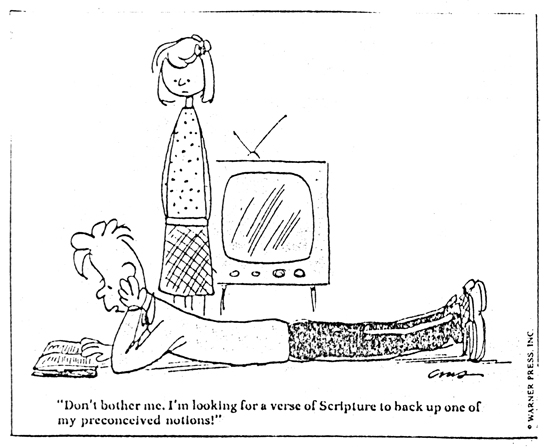
The reason I find this so interesting (besides the fact that I'm a huge nerd) is because of the analogy I tend to see between this and faith. Take, for example, debates on Scriptural interpretation. I've always grown up with the sense that I had to take things literally and in the most conservative fashion because it was the safest way to go. I would worry that more liberal interpretations were 1) not grounded in anything, and 2) were slippery slopes to more and more liberal interpretations until we were basically just making stuff up.
 What I find so fascinating about N.T. Wright's view is that he seems to do for theology just what relaxed variational forms do for PDEs. More on this in the next post :P this one's long and mathematical enough already.
Scientists and engineers are interested in partial differential equations (PDEs). They model basically all physical phenomena, from biology to physics to everything in between - most computer simulations involve solving PDEs (like car crash testing, or airplane modeling). They might look like

So the double derivative of u w.r.t. x is equal to some function "f(x,y)". There are many examples, all on Wikipedia (heat equation, wave equation, Navier Stokes equations, etc etc) and all with physical meaning, but for now, we'll focus on the math.
In formal mathematics, before ever solving this, it's necessary to prove a solution even exists. Additionally, most of the time we solve these problems on computers using approximations...and the reason that existence of solutions is important is precisely because of these approximation methods. Approximation methods, on an abstract level, search a "space" of functions for a function that is close to the solution of the PDE. However, unless a solution exists, it's pointless to try to approximate it. Let me illustrate.
I'm sure most of you have played the game where you have 3 or 4 hole shapes, and a set of blocks. The goal is to put all the blocks through the correct hole (triangle goes in triangle hole, circle goes in circle hole, etc etc).
I'm going to use the following analogy for the rest of the post. Imagine a game where you have such a set of blocks, and just one hole. That set of blocks is like the "space" of functions that we search for a solution, and the hole is like the PDE - it tells us what the solution should do (i.e. fit in the hole, or in the PDE sense, satisfy the equation).
Now, imagine that instead of our set of blocks, we get something akin to Legos - we may not have the block that fits in the hole, but if we get make our collection of Legos more and more diverse, we may be able to build something that fits in the hole. This is basically what PDE solvers are doing - they try to build a solution/block that fits in the hole/PDE. However, pretend the hole is fake or doesn't go through all the way. This is akin to the problem not having a solution - you can search all you want in the Legos, but you will never be able to force anything through that hole.
So far, it's been pretty straightforward, right? Build a block that fits into the hole. Get more pieces if it doesn't and keep trying. However, if you think about it, we may not actually want the "solution" block that we build to fit through the hole itself. Imagine, for example, the edged corners of legos. Pretend our hole is a circle.
You could get a good approximation to a circle from squares, but the edges of the squares would prevent the approximation from fitting in the hole (unless you cut them off, like in the above pic). If you did actually get the approximation to fit, it would probably look smaller than the circle that would actually fit in the hole.
Hence, we get to the idea of "relaxing constraints", which is a large part of what variational forms do. Basically, we change the rules of our game - we're no longer looking to build something that fits in the hole, we're now trying to build something that looks like something that would fit in the hole. In other words, we're relaxing the constraints on our solution, changing it from "needs to fit into hole" to "needs to look like something that fits into the hole".
How does this look mathematically? Take our old equation
and pretend we multiply it by some random differentiable function "v(x)" for no reason, and then integrate it from 0 to 1. If v = 0 when evaluated at both x = 1 and x = 0, then we can integrate it by parts. What this reduces to is a so-called "variational form" of the equation.

The subtle difference is in the derivatives - notice that in the old equation, we took the derivative of our solution "u" twice, which meant it had to be differentiable twice. However, in the new case, we only have to take the derivative of "u" once. Mathematically, we took constraints off of the equation, and believe it or not, this makes a huge difference in solving for solutions, especially for more complex equations. There is additional advantage in using variational forms (powerful theorems concerning solutions and accuracy) but that's much more mathematically complex.
The other key part to notice concerning variational forms is the function "v" we multiplied by, which is formally called a "test function". Notice we move a derivative from "u" over to "v". In some sense, we're splitting the differential equation between functions "u" and "v". This is the reason some say that variational forms capture the "action" of a differential equation on test functions, and this, in my opinion, is the more interesting way to look at variational forms. You don't look at just the differential equation and its solution anymore; you look at what the differential equation looks like to the test functions that "see" the equation, and you look at the way the solution is "seen" by the test functions as well.
The reason I find this so interesting (besides the fact that I'm a huge nerd) is because of the analogy I tend to see between this and faith. Take, for example, debates on Scriptural interpretation. I've always grown up with the sense that I had to take things literally and in the most conservative fashion because it was the safest way to go. I would worry that more liberal interpretations were 1) not grounded in anything, and 2) were slippery slopes to more and more liberal interpretations until we were basically just making stuff up.
What I find so fascinating about N.T. Wright's view is that he seems to do for theology just what relaxed variational forms do for PDEs. More on this in the next post :P this one's long and mathematical enough already.Tuesday, July 13, 2010
standards of interpretation? and more math
Good news, everybody (who hasn't seen an update on facebook for this). I got surgery! And hopefully it'll fix the holes that have been developing in my ankle for a while now. Unfortunately, it means I'm out of commission for a good 2 months before I walk again, so I'm trying right now to keep myself more busy than I've been in the past few days (most of which were spent on facebook, craigslist, and onemanga.com).
For the past couple of days I've been reading the Biologos blog for a few days now. They had a recent post in which they discussed Albert Mohler's (prez of the Southern Baptist Theological Seminary) speech in which he defended a young-earth interpretation of Genesis and criticized Biologos for trying to cater to both science and faith. A transcript of Mohler's talk can be found here.
While I'm not sold on theistic evolution either, I do think Mohler is a bit off. Let me explain and compare N.T. Wright's way of thinking to his.
From what I can see, Mohler believes in 7 day young earth creationism, based on the common-sense/straightforward reading of Genesis. I think his interpretation and arguments are flawed, not just because of scientific evidence, but also because his exegetical and theological reasons for requiring a young earth interpretation are lacking (Biologos has more on those reasons here and here).
However, arguing further over this only makes a mountain out of a molehill - it eats up time researching and arguing, and at the same time only makes the rift b/w young earth and old earth and whatever else is out there bigger (and didn't Jesus tell us all to be as one?).
And this is why I like Wright. N.T. Wright doesn't directly subscribe to either old/young earth - he sort of sidesteps the question and asks a different one.
The video opens with him discussing different datings of Genesis; almost immediately after, he basically sidesteps the question and asks instead how Genesis was read by the Jewish people right before New Testament times. What was the action or impact of Genesis on the people Jesus came to reach?
In asking this question, Wright takes two steps:
A recent comment to a previous post on the subject - "do subsequent authors of the Bible take that view of Genesis, or do they have a more literal interpretation?" That's up to debate; I've heard both views taken. However, I do think that asking whether or not the authors believed one thing or not is kind of missing the point - Israelites may have believed lots of things which were factually wrong.
As an analogy, imagine trying to read "The Tortoise and the Hare" to a child. The kid might exclaim halfway through the story that hares and tortoises aren't intelligent enough to want to race each other in the first place. Yes, the kid is technically right in his statement, but that's not the point. A better analogy might be of cultural stories - most historians and anthropologists look beyond the question of whether they're true or false in order to ask the question, "what can this story tell me about the people that told it?".
Wright says it best at the end of the video - the whole debate on evolution/creation/etc in Genesis 1 has taken our attention from the larger picture and focused it on (possibly meaningless) details, so that the end message conveyed through our interpretation is something completely different than what anyone before the 19th century would have read. If Paul is right, and Jesus' death and resurrection are the grounds on which faith stands, then faith is grounded in a specific historical event and a specific person who lived his life as a message to a specific people. In order to understand more deeply what Jesus was preaching, I'd want to be as close as I could to his messages, and to do that, I'd need to walk there in Jewish shoes.
As a funny aside, I immediately thought of the mathematical concept of "weak formulations" after writing this post. If you're at all interested (please be interested) tell me and I'd love to explain it and how it relates in my mind to these arguments :D.
For the past couple of days I've been reading the Biologos blog for a few days now. They had a recent post in which they discussed Albert Mohler's (prez of the Southern Baptist Theological Seminary) speech in which he defended a young-earth interpretation of Genesis and criticized Biologos for trying to cater to both science and faith. A transcript of Mohler's talk can be found here.
While I'm not sold on theistic evolution either, I do think Mohler is a bit off. Let me explain and compare N.T. Wright's way of thinking to his.
From what I can see, Mohler believes in 7 day young earth creationism, based on the common-sense/straightforward reading of Genesis. I think his interpretation and arguments are flawed, not just because of scientific evidence, but also because his exegetical and theological reasons for requiring a young earth interpretation are lacking (Biologos has more on those reasons here and here).
However, arguing further over this only makes a mountain out of a molehill - it eats up time researching and arguing, and at the same time only makes the rift b/w young earth and old earth and whatever else is out there bigger (and didn't Jesus tell us all to be as one?).
And this is why I like Wright. N.T. Wright doesn't directly subscribe to either old/young earth - he sort of sidesteps the question and asks a different one.
The video opens with him discussing different datings of Genesis; almost immediately after, he basically sidesteps the question and asks instead how Genesis was read by the Jewish people right before New Testament times. What was the action or impact of Genesis on the people Jesus came to reach?
In asking this question, Wright takes two steps:
- He takes interpretation of Genesis away from facts (which may or may not change lives) and back into the theological realm - how it was read by the Jewish people impacts how Jesus' message should affect us.
- Wherease Mohler's interpretation of texts was based on "common sense" readings, Wright gives a clear standard of interpretation for Biblical texts - Jesus and the nation of Israel that he came for.
A recent comment to a previous post on the subject - "do subsequent authors of the Bible take that view of Genesis, or do they have a more literal interpretation?" That's up to debate; I've heard both views taken. However, I do think that asking whether or not the authors believed one thing or not is kind of missing the point - Israelites may have believed lots of things which were factually wrong.
As an analogy, imagine trying to read "The Tortoise and the Hare" to a child. The kid might exclaim halfway through the story that hares and tortoises aren't intelligent enough to want to race each other in the first place. Yes, the kid is technically right in his statement, but that's not the point. A better analogy might be of cultural stories - most historians and anthropologists look beyond the question of whether they're true or false in order to ask the question, "what can this story tell me about the people that told it?".
Wright says it best at the end of the video - the whole debate on evolution/creation/etc in Genesis 1 has taken our attention from the larger picture and focused it on (possibly meaningless) details, so that the end message conveyed through our interpretation is something completely different than what anyone before the 19th century would have read. If Paul is right, and Jesus' death and resurrection are the grounds on which faith stands, then faith is grounded in a specific historical event and a specific person who lived his life as a message to a specific people. In order to understand more deeply what Jesus was preaching, I'd want to be as close as I could to his messages, and to do that, I'd need to walk there in Jewish shoes.
As a funny aside, I immediately thought of the mathematical concept of "weak formulations" after writing this post. If you're at all interested (please be interested) tell me and I'd love to explain it and how it relates in my mind to these arguments :D.
Saturday, June 19, 2010
crappy coding practices
I've been working with my professor's code for the past 2 years, and it's got a reputation for being hard to work with. At the same time, my prof is so incredibly proud of it, and claims (correctly) that it can do things no other code can do for problems. The hard part is getting it to do what you want correctly.
A quick coding philosophy lesson - like Shrek and onions, good code should have layers, each with a different level of immutability. This tends to hold in general for any algorithm, program, set of instructions for a problem - make it so that small changes to the problem require only small changes to the program in order to adapt to the new problem.
An example of what not to do - say a program uses some general algorithm to solve a mathematical problem. Hard-code information about a particular problem into the algorithm code, however, and you have a code that's intertwined too much, so that things are connected where they shouldn't be. When you change the problem you're solving, you end up needing to change what should be a general algorithm as well.
Of course, this means that if your code is layered, your inner most code will be used by almost everything else, so to change something there may mean recoding most of the code base. My prof's code is a great example; he built things based around coding protocols and methods of the 70's and 80's, so the heart of the code boasts some pretty annoying outdated practices (for those that are interested, two phrases - implicit declarations and global variables). To further complicate matters, since he needs to maintain some form of control over the code, he refuses to let anyone but himself change these data structures.
So you have a code that has worked for my professor, but has been packaged in a way that nobody can fix it, and few people want to use it because it's so user unfriendly.
N.T. Wright's remark about the rigid intertwining of religious belief with political agendas (abortion, evolution) and specific doctrines (specific inerrancy, literal interpretation) reminds me of my experiences with coding. When coding with my professor's code, I have to write the code in a certain way in order for it to fit the logic of the overall codebase.
Similarly, I feel like theological thought needs then to be executed a certain way in order to fit into the framework of such religious thought. Dr Tour at Rice who I've discussed apologetics with is a good example. When we discussed inconsistencies with the gospel accounts, I interpreted it like Luther - the differences exist, but they do not undermine the overall message. Dr Tour took 15 minutes to discuss the details of how the story, told from two different people's points of views, could appear different but be exactly the same. In the end, I walked away fairly confused by the presentation. This isn't to say he's wrong; however, if he is, then I think his faith would take a fairly significant blow because it was built up from a very specific doctrine which may or may not be true.
In this video, Wright makes an observation about Genesis that I've never heard before - that the 6 day description was written for the Jewish people because that's how tabernacles were described as being built. I think I can appreciate his flexible faith - he doesn't start from doctrine, and thus has room for change - especially for when we make mistakes - when new developments arise.
A quick coding philosophy lesson - like Shrek and onions, good code should have layers, each with a different level of immutability. This tends to hold in general for any algorithm, program, set of instructions for a problem - make it so that small changes to the problem require only small changes to the program in order to adapt to the new problem.
An example of what not to do - say a program uses some general algorithm to solve a mathematical problem. Hard-code information about a particular problem into the algorithm code, however, and you have a code that's intertwined too much, so that things are connected where they shouldn't be. When you change the problem you're solving, you end up needing to change what should be a general algorithm as well.
Of course, this means that if your code is layered, your inner most code will be used by almost everything else, so to change something there may mean recoding most of the code base. My prof's code is a great example; he built things based around coding protocols and methods of the 70's and 80's, so the heart of the code boasts some pretty annoying outdated practices (for those that are interested, two phrases - implicit declarations and global variables). To further complicate matters, since he needs to maintain some form of control over the code, he refuses to let anyone but himself change these data structures.
So you have a code that has worked for my professor, but has been packaged in a way that nobody can fix it, and few people want to use it because it's so user unfriendly.
N.T. Wright's remark about the rigid intertwining of religious belief with political agendas (abortion, evolution) and specific doctrines (specific inerrancy, literal interpretation) reminds me of my experiences with coding. When coding with my professor's code, I have to write the code in a certain way in order for it to fit the logic of the overall codebase.
Similarly, I feel like theological thought needs then to be executed a certain way in order to fit into the framework of such religious thought. Dr Tour at Rice who I've discussed apologetics with is a good example. When we discussed inconsistencies with the gospel accounts, I interpreted it like Luther - the differences exist, but they do not undermine the overall message. Dr Tour took 15 minutes to discuss the details of how the story, told from two different people's points of views, could appear different but be exactly the same. In the end, I walked away fairly confused by the presentation. This isn't to say he's wrong; however, if he is, then I think his faith would take a fairly significant blow because it was built up from a very specific doctrine which may or may not be true.
In this video, Wright makes an observation about Genesis that I've never heard before - that the 6 day description was written for the Jewish people because that's how tabernacles were described as being built. I think I can appreciate his flexible faith - he doesn't start from doctrine, and thus has room for change - especially for when we make mistakes - when new developments arise.
Thursday, May 20, 2010
still alive!
I think I'm still alive, at least. Finals were terrible; either I'm getting dumber or classes are getting harder, or both. I'm honestly hoping not to get a C in one class (yikes!), which is definitely a first.
I'm hoping to be able to post more in the summer; I haven't been too productive on the blog recently (though I'd attribute that to actually having a few friends in Austin now :D).
I'm hoping to be able to post more in the summer; I haven't been too productive on the blog recently (though I'd attribute that to actually having a few friends in Austin now :D).
Monday, March 8, 2010
shamelessly stolen from Nick
"Jesus...represents power of a different kind from that which Pilate could comprehend. His is the power at the heart of creation, the axis of history, the grain of the universe...Jesus renounces violence because he has power. The weapons of war are rejected not because they are too powerful but because they are too wea...k; not because they change too much but because they change too little." - Samuel Wells
Friday, February 26, 2010
College students and carelessness
Recently, I parked my bike at the Intervarsity office of UT while practicing for an event there. When I came out, both my brake lever and handlebar had been bent. I am pretty frustrated still - for one, it takes one hell of a big impact to a bike to do that, and for the guys who did it to just f*cking walk away is kinda pissing me off. Two, I am a bit pissed that this happened at a college Intervarsity office - a Christian fellowship.
I'm reminded of quite a few times this has happened, and I'm trying to figure out if it's a college Christian or just a college thing, but while most of the Christian college students I know are amazing passionate and motivated, they can be a little careless. I speak from my own personal experiences too; I am, (and was much more in my college days) an inconsiderate and careless person like this.
I'm not going to have any big sociological religious explanations for their behavior (it'd probably be a stretch anyways), but I'm reminded of that verse - don't throw your pearls before swine, translated by Wikipedia as "don't put things in front of people who don't appreciate their value".
I'm reminded of quite a few times this has happened, and I'm trying to figure out if it's a college Christian or just a college thing, but while most of the Christian college students I know are amazing passionate and motivated, they can be a little careless. I speak from my own personal experiences too; I am, (and was much more in my college days) an inconsiderate and careless person like this.
I'm not going to have any big sociological religious explanations for their behavior (it'd probably be a stretch anyways), but I'm reminded of that verse - don't throw your pearls before swine, translated by Wikipedia as "don't put things in front of people who don't appreciate their value".
Subscribe to:
Posts (Atom)